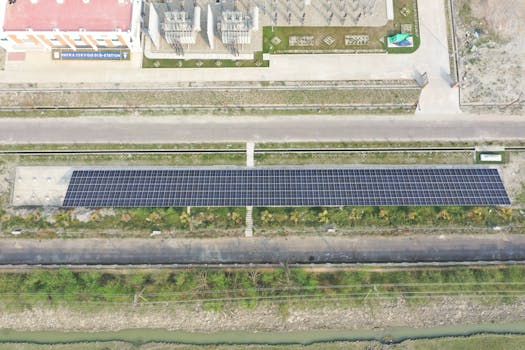
Picture this: You’re sipping your morning coffee, the sun streaming through your window, and you know your power comes directly from that same sun. No noisy generators, no fluctuating hydro bills, just pure, clean energy. Sounds idyllic, right? For many Ontarians who’ve ventured into the world of off-grid solar systems in Ontario, this isn’t just a dream; it’s their reality. But let’s be honest, it’s not all sunshine and rainbows. It’s a deliberate, sometimes complex, but ultimately rewarding path. If you’re curious about ditching the grid in the Great White North, you’ve come to the right place.
Why Go Off-Grid in Ontario? The Real Motivations
It’s not just about being a tree-hugger, although that’s a fantastic perk! People choose off-grid solar for a medley of compelling reasons. For some, it’s about energy independence – a satisfying feeling of self-sufficiency, especially when you’re far from traditional power lines. Think of those remote cabins or rural homesteads where running a line is astronomically expensive, or even impossible.
Then there’s the environmental aspect. Harnessing solar power is one of the most direct ways to reduce your carbon footprint. Ontario is blessed with abundant sunshine, making it a prime location for this renewable energy solution. And let’s not forget the growing unpredictability of our traditional power grids; being off-grid offers a certain peace of mind.
The Nuts and Bolts: What Makes Up Your Off-Grid Solar System?
So, what exactly goes into these independent powerhouses? It’s a carefully orchestrated dance of components.
Solar Panels (Photovoltaic Modules): These are the stars of the show, capturing sunlight and converting it into DC electricity. The number and type you need will depend on your energy consumption and your location’s sun exposure.
Charge Controller: Think of this as the brain of your system. It regulates the flow of electricity from the panels to your batteries, preventing overcharging and extending battery life.
Battery Bank: This is where your energy is stored for use when the sun isn’t shining (hello, cloudy days and evenings!). Deep-cycle batteries, often lead-acid or lithium-ion, are designed for this purpose. This is often the most significant upfront investment.
Inverter: Your solar panels and batteries produce DC (direct current) power, but most of your appliances run on AC (alternating current) power. The inverter’s job is to convert that DC power into usable AC power.
Mounting System: This securely holds your solar panels in place, often on your roof or on the ground, angled to maximize sun exposure.
Navigating the Ontario Landscape: Key Considerations
Setting up off-grid solar systems in Ontario comes with its own set of unique considerations. It’s not a one-size-fits-all scenario, and understanding these nuances is crucial for success.
#### The Sun Factor: Ontario’s Solar Potential
While Ontario gets decent sun, it’s not the Sahara. We have distinct seasons, and winter days are shorter with less intense sunlight. This means your system design needs to account for these variations. You’ll need to carefully calculate your average daily energy needs and factor in those lower sunlight months. I’ve seen folks underestimate this and find themselves running their generator more than they’d like during February!
#### Battery Storage: The Heart of Your Off-Grid Life
This is where a lot of the magic (and cost) happens. How much battery storage do you really need? It boils down to your daily kilowatt-hour (kWh) usage. You’ll want enough capacity to power your home for a few days without any sun – often called “days of autonomy.” Lithium-ion batteries are becoming increasingly popular due to their longevity and efficiency, though they come with a higher initial price tag compared to traditional lead-acid options.
A lot of what makes mastering off-grid living: your realistic ontario solar power journey interesting only shows up once you spend real time with it. That connects naturally with grid, something covered in more depth over at thesindi.com. It adds some useful context either way.
#### System Sizing: More Than Just Adding Up Watts
Sizing your system correctly is an art and a science. It’s not just about looking at your most power-hungry appliance and buying panels to match. You need to consider:
Your total daily energy consumption: Track your usage honestly.
Peak sun hours in your location: This varies across Ontario.
System losses: There are always some inefficiencies.
* Future needs: Might you add an electric vehicle in a few years?
Under-sizing means you’ll constantly be short on power, relying heavily on backup generators. Over-sizing means you’ve spent more than necessary on equipment. Getting this right is paramount for a smooth transition.
The Costs and the Rewards: An Honest Look
Let’s talk numbers. Setting up a robust off-grid solar system in Ontario is an investment. You’re looking at significant upfront costs for panels, batteries, inverters, and installation. Depending on the size and complexity, you could be in the tens of thousands of dollars. It’s definitely not a casual purchase.
However, the long-term rewards are substantial. You eliminate your monthly electricity bills entirely. You gain energy security and resilience. And you’re contributing to a cleaner planet. When you factor in the rising costs of traditional energy, the payback period, while long, becomes much more attractive. Plus, government incentives and rebates can sometimes help offset initial costs, so it’s always worth investigating what’s available in Ontario.
Is Off-Grid Solar in Ontario Right for You?
Deciding to go off-grid is a big step, and it requires careful planning and a realistic outlook. It’s for the self-sufficient, the environmentally conscious, and those who value independence. It’s about embracing a lifestyle that’s different, one that often involves a bit more awareness and active management of your resources.
Wrapping Up: Your First Step to Solar Independence
Embarking on the path to off-grid solar systems in Ontario is an exciting prospect, offering a taste of true energy freedom. My best advice? Start with a detailed energy audit of your current home or the home you plan to build. Knowing precisely how much power you consume is the bedrock upon which a successful and efficient off-grid system is built.