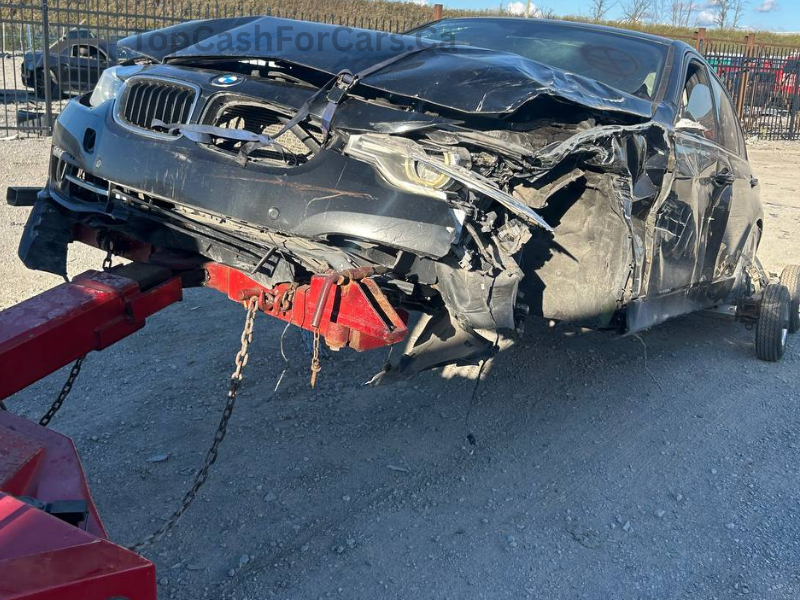
In Ontario, an end-of-life vehicle is not defined by age, mileage, rust or whether the engine still starts. Ontario Regulation 85/16 defines an end-of-life vehicle as a motor vehicle or vehicle hulk that has been abandoned, or that is being managed for recycling, for reuse other than as an operable motor vehicle, or for disposal. The same regulation says “managed” includes collection, handling, transportation, storage, processing and disposal.
That definition changes the picture. The familiar image of an unwanted car going straight from a driveway to a crusher skips much of the regulated chain. Once a vehicle is being handled for recycling or disposal, the relevant system is no longer only a vehicle transaction. It is also a waste-management and materials-recovery process.
What looks like one transaction is actually several
For the last owner, the process can appear straightforward: a buyer takes the vehicle, arranges collection and the car leaves the property. Some Toronto operators, for example, combine the purchase of the vehicle with its pickup, so there may be no obvious boundary between selling the car and moving it into the next stage of the chain.
That simplicity exists mainly at the seller’s end. Downstream, an end-of-life vehicle can be collected, transported and stored before materials are removed and the remaining structure is eventually sheared, crushed or shredded. Ontario regulates these activities separately because collection, fluid removal, storage and mechanical processing create different environmental and operational risks.
The word “scrap” can obscure that distinction. A complete vehicle is not a homogeneous block of ferrous metal. It contains fluids, a battery, tires, lead-containing components and, depending on the vehicle, other materials that Ontario does not permit to travel intact into the crushing or shredding stage.
Ontario requires depollution before crushing or shredding
Regulation 347 makes the order of operations explicit. A person may not shear, crush or shred an end-of-life vehicle unless specified materials have first been removed. The list includes batteries, battery cable connectors containing lead, electrical switches containing mercury, fluids, tires, lead tire weights, asbestos waste and any additional materials identified in the province’s referenced removal document.
That is more specific than a general requirement to recycle a vehicle responsibly. It places depollution upstream of mechanical size reduction.
The paperwork follows the material. Once none of the listed items remain, the person performing the removal must complete a certificate for the vehicle or shipment. Depending on the facility, it identifies the relevant Environmental Activity and Sector Registry registration, Environmental Compliance Approval or other required site information, provides contact details and confirms that the prescribed materials are no longer present.
Copies are not disposable paperwork. Regulation 347 requires them to be retained for at least two years at the location where the items were removed and at the location where the vehicle is later crushed, shredded or sheared. A downstream processor may rely on that certificate unless there is reason to believe one of the listed materials is still present.
The crusher, then, is not supposed to be the first serious processing point. By the time the vehicle reaches that equipment, a regulated material-removal step should already have occurred.
A dismantling yard is an environmental operation, not just a parking lot
Ontario Regulation 85/16 goes further by prescribing how qualifying end-of-life vehicle waste disposal sites operate. Certain ELV activities are registered through the Environmental Activity and Sector Registry, while the regulatory framework also distinguishes facilities or activities that may fall under other approval requirements or exemptions.
The requirements are physical, not merely administrative. At registered sites subject to the regulation, fluids must be removed before a vehicle is sheared, crushed or shredded. Fluid removal must occur on an impermeable surface with spill containment and under a covered structure so that precipitation does not contact the fluids or the components being drained.
Storage is regulated too. Removed fluids must be handled so that containers do not leak or deteriorate. Wet components require an impermeable pad and protection from precipitation. Batteries and certain lead- or mercury-containing materials are subject to storage requirements, and storage areas and containers must be inspected for spills and leaks at least once a week.
The people doing the work are part of the compliance system. Ontario requires relevant employees and workers to receive training that covers waste-management law, environmental and occupational hazards, equipment use, emergency response and spill procedures. Equipment used to shear or crush permitted material at the site may be operated only between 7 a.m. and 7 p.m.
None of those rules determines what an owner should receive for a vehicle. They do show why the downstream operation cannot accurately be reduced to “take car, weigh steel, crush car.” A compliant ELV site requires containment, storage, trained labour, inspections, records and routes for materials that have to leave the vehicle before its metal structure is processed.
Reuse and recycling are different stages
Another distinction disappears when every unwanted vehicle is described simply as scrap. Removing regulated materials before crushing is mandatory. Recovering every component that might still have a second life is not the same legal requirement.
A dismantler may find a market for components before the remaining shell enters material recovery. The regulatory removal list, however, is not a catalogue of every potentially resalable door, alternator, transmission or body panel. It focuses on specified materials that must be removed before crushing, shredding or shearing.
That leaves an important operational layer between mandatory depollution and final metal processing. Parts harvesting depends on the condition of the particular vehicle, demand for compatible components, the operator’s business model and the practical cost of recovery. Those are commercial decisions rather than additions to Ontario’s mandatory pre-crushing list.
Two non-running vehicles that look equally finished to their owners can therefore follow different downstream paths. One may spend longer in dismantling because usable components have a market. Another may move toward material processing relatively quickly after the prescribed items have been removed. “Scrap car” describes neither route very precisely.
The transport layer changed in 2024
Moving the vehicle between those stages is also regulated separately. Major customer-protection provisions of Ontario’s Towing and Storage Safety and Enforcement Act took effect on January 1, 2024. The provincial framework introduced requirements covering tow operators, tow-truck drivers and vehicle-storage operators, including certification and customer protections around consent, destination, access, invoices and payments.
The Act defines towing services broadly. It includes towing, recovery or transportation of vehicles that are disabled, abandoned, impounded, seized, damaged, incomplete or inoperable, as well as vehicles requiring removal from a location for another reason, subject to the regulations.
That does not mean every vehicle purchase is a conventional consumer tow transaction. A vehicle buyer may operate within the applicable certification framework or use another towing provider, and statutory exemptions can matter in particular circumstances. The relevant point is narrower: transportation is its own regulated layer rather than an invisible step between the driveway and a recycling facility.
Ontario had a concrete reason to revisit that layer. In the provincial towing task force’s public consultation, 53% of Toronto respondents reported towing issues. The result varied sharply with how the operator was selected: 78% of respondents who used a truck that appeared without being explicitly called reported problems, compared with 15% among respondents who called a towing operator directly and 10% among those using an automobile association or roadside-assistance program. The survey was a consultation sample rather than a population estimate, but the contrast helped inform the subsequent provincial oversight model.
The useful dividing line is not “used car” versus “scrap car”
Ontario’s vehicle-branding system adds one more classification that is easy to confuse with end-of-life status. A severely damaged vehicle can be branded Salvage or Irreparable, but those brands do not mean the same thing.
Vehicle branding and ELV regulation therefore answer different questions. Branding deals with the road-use future of severely damaged vehicles. Environmental rules govern vehicles being managed for recycling, non-operable reuse or disposal. Towing legislation regulates part of their physical movement.
Put those systems together and the end of a vehicle’s road life looks less like a single scrap transaction than a chain of custody. The owner’s part may be over as soon as the vehicle is collected. Downstream, the relevant questions are where it goes, who transports it, what must be removed, how those materials are contained, and what documentation follows the remaining structure before it reaches a crusher.