
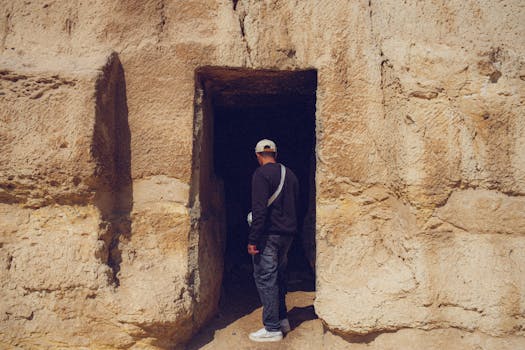
Let’s be honest, when you think of the “Pyramids of Giza,” your mind probably conjures images of dusty pharaohs, maybe a slightly bewildered camel, and a whole lot of sand. And while those are certainly part of the experience, the reality of these colossal structures is far more mind-boggling. Forget the Hollywood hype; these ancient wonders are engineering marvels that still make modern architects scratch their heads. We’re talking about structures built with such precision, using materials that, frankly, shouldn’t have been movable by ancient means. It’s enough to make you wonder if they had a secret alien construction crew, isn’t it?
But before we go down that rabbit hole (though a fascinating one it is!), let’s ground ourselves in the facts. The Pyramids of Giza aren’t just a pile of old rocks; they’re a testament to human ingenuity, ambition, and a profound belief system that shaped an entire civilization. They stand as silent, stoic witnesses to millennia of history, and understanding them is like unlocking a secret code to the ancient world.
The Grand Trio: More Than Just Three Piles of Stone
When people talk about the Pyramids of Giza, they’re usually referring to the three main structures that dominate the skyline: the Great Pyramid of Giza (also known as the Pyramid of Khufu), the Pyramid of Khafre, and the Pyramid of Menkaure. These aren’t just random buildings; they were meticulously planned and constructed as elaborate tombs for pharaohs of the Fourth Dynasty of the Old Kingdom.
The Great Pyramid of Khufu: This is the big daddy, the undisputed champion of pyramids, and the oldest and largest of the three. It was once the tallest man-made structure in the world for over 3,800 years! Imagine building something that impressive with nothing but ropes, ramps, and a whole lot of elbow grease.
The Pyramid of Khafre: Sitting slightly higher due to its location on bedrock, Khafre’s pyramid looks taller than Khufu’s, and it’s the only one that still retains a significant portion of its original polished limestone casing at its apex. It’s like the slightly more ostentatious sibling.
The Pyramid of Menkaure: The smallest of the three, Menkaure’s pyramid might be modest in size, but it’s no less significant. It’s a reminder that even as the dynasty progressed, the desire for an eternal resting place remained paramount.
Beyond these giants, the Giza plateau is littered with smaller “subsidiary pyramids,” queens’ pyramids, and mastabas (flat-topped tombs), creating a vast necropolis that was once a bustling center of activity during construction.
The Million-Dollar Question: How Did They Actually Build Them?
Ah, the eternal question that keeps archaeologists and conspiracy theorists alike up at night! The sheer scale and precision of the Pyramids of Giza are astounding. We’re talking about blocks of stone weighing anywhere from 2.5 to over 80 tons, quarried, transported, and lifted into place with incredible accuracy.
While aliens might be a fun thought experiment, the prevailing (and evidence-based) theory involves a highly organized workforce, ingenious engineering, and a deep understanding of physics. Here’s what the experts generally agree on:
Massive Workforce: This wasn’t a slave labor operation as often depicted. Evidence suggests skilled craftsmen, laborers, and artisans worked on the pyramids, likely during the Nile’s inundation period when agricultural work was impossible. They were fed, housed, and even received medical care.
Quarrying Techniques: Limestone was quarried locally, while granite for internal chambers and sarcophagi was transported from Aswan, hundreds of miles away. They likely used copper tools, possibly hardened with arsenic, and wooden wedges that, when soaked with water, would expand and split the rock.
Transportation Secrets: This is where things get really clever. Massive blocks were likely moved on sledges over lubricated surfaces (perhaps water or mud) to reduce friction. For river transport, they would have used barges during the annual flood.
Construction Methods: Ramp systems are the most popular theory. These could have been straight ramps, zigzag ramps, or even internal ramps. Imagine the logistics of building a ramp that stretches hundreds of feet high! It’s an engineering feat in itself.
It’s fascinating to consider the sheer human effort and organizational prowess required. They didn’t have cranes, power tools, or even the wheel for heavy hauling (though they likely knew of it). It’s a humbling reminder of what dedicated, intelligent people can achieve.
beyond the camel rides: unraveling the enigma of the pyramids of giza is one of those subjects that rewards a closer look. You’ll often see pyramid mentioned alongside this, and thesindi.com has more on that connection. Worth a look if you want the fuller picture.
Purpose and Symbolism: More Than Just a Royal Bedroom
So, why all this effort? The primary purpose of the Pyramids of Giza was to serve as tombs for the pharaohs, ensuring their safe passage to the afterlife and their continued divine rule. But it goes deeper than that.
The Ascent to the Heavens: The pyramid shape itself is believed to symbolize the primordial mound from which the Egyptians believed life emerged, or perhaps a staircase for the pharaoh’s soul to ascend to the heavens and join the sun god Ra. It’s a powerful metaphor for eternal life.
Preservation and Protection: The massive stone structure was designed to protect the pharaoh’s body and funerary goods from tomb robbers and the ravages of time, allowing their spirit to endure forever.
Cosmic Alignment: The pyramids are remarkably aligned with the cardinal directions, and some theories suggest they were aligned with specific constellations, reflecting the Egyptians’ sophisticated understanding of astronomy and their belief in a cosmic order.
It’s interesting to note that the complex at Giza wasn’t just about the pyramids; it included temples, causeways, and boat pits, all integral parts of the funerary rituals and the pharaoh’s journey into eternity.
Debunking Common Myths: No Little Green Men Required
Given their mystique, it’s no surprise that the Pyramids of Giza have attracted their fair share of fringe theories. While it’s fun to speculate, most of these can be neatly explained by solid archaeological and historical evidence.
“Too Precise for Ancient Humans”: The precision is indeed remarkable, but it’s achievable with careful surveying, simple tools, and immense dedication. Think of the careful measurement of agricultural fields after the Nile flood – a similar level of precision applied on a grander scale.
“Lost Technology”: While their technology was different from ours, it was highly effective. They mastered levers, inclined planes, and simple machines to achieve what they did.
* Alien Builders: There’s simply no credible evidence for this. The archaeological record points to indigenous Egyptian innovation and labor. It’s a romantic notion, perhaps, but not a factual one.
The real “magic” lies in understanding the ingenuity and sheer grit of the ancient Egyptians themselves. They didn’t need advanced technology; they had brilliant minds, a motivated workforce, and a profound spiritual drive.
Visiting the Pyramids of Giza: A Journey Through Time
Stepping onto the Giza plateau is an experience that humbles you. The sheer scale, the ancient stones worn smooth by millennia of wind and sun, the vastness of the desert stretching out before you – it’s an unparalleled journey back in time.
When you visit, try to imagine the bustling activity that once surrounded these structures, the religious processions, the skilled laborers toiling away. It’s not just about seeing ancient monuments; it’s about connecting with a civilization that, in many ways, laid the groundwork for so much of what we understand today.
Wrapping Up: The Enduring Legacy of the Pyramids of Giza
The Pyramids of Giza are more than just colossal tombs; they are enduring symbols of human ambition, engineering prowess, and a civilization’s deep connection to the divine and the eternal. They challenge our perceptions of what’s possible and remind us of the incredible feats achieved by our ancestors.
So, the next time you see a picture of these magnificent structures, remember the human hands that shaped them, the brilliant minds that conceived them, and the profound beliefs that inspired them.
Now, the question remains: what other ancient mysteries are waiting to be unearthed by the power of human curiosity and dedication?



As soon as I discovered this web site I went on reddit to share some of the love with them.
Way cool, some valid points! I appreciate you making this article available, the rest of the site is also high quality. Have a fun.
Nice blog here! Also your site loads up very fast! What web host are you the use of? Can I am getting your affiliate link in your host? I want my web site loaded up as quickly as yours lol
I really appreciate this post. I’ve been looking everywhere for this! Thank goodness I found it on Bing. You’ve made my day! Thank you again!
It’s really a nice and useful piece of information. I am glad that you simply shared this useful information with us. Please keep us up to date like this. Thanks for sharing.
비아그라 구매 전 알아야 할 국내 처방 절차와 약국 이용 방법, 가격 확인 기준을 안내합니다. 실데나필 성분, 정품 확인 시 주의점, 복용 전 상담사항과 자주 묻는 질문을 확인하세요.
Pretty! This was a really wonderful post. Thank you for your provided information.
What i don’t understood is in reality how you are now not really much more neatly-favored than you may be now. You are so intelligent. You already know therefore considerably on the subject of this subject, made me individually consider it from a lot of numerous angles. Its like men and women don’t seem to be involved unless it is something to do with Lady gaga! Your own stuffs outstanding. All the time care for it up!
you are truly a good webmaster. The website loading pace is amazing. It seems that you’re doing any distinctive trick. Also, The contents are masterwork. you have done a wonderful task in this topic!
You could definitely see your skills in the work you write. The world hopes for more passionate writers like you who aren’t afraid to say how they believe. Always follow your heart.
I’ve recently started a blog, the info you offer on this site has helped me greatly. Thanks for all of your time & work.
Yesterday, while I was at work, my sister stole my iphone and tested to see if it can survive a 30 foot drop, just so she can be a youtube sensation. My iPad is now destroyed and she has 83 views. I know this is completely off topic but I had to share it with someone!
There is obviously a bundle to identify about this. I think you made certain good points in features also.
I likewise think thence, perfectly pent post! .
I am only commenting to let you understand of the helpful encounter my cousin’s child developed going through your site. She mastered so many things, which include how it is like to have an awesome teaching heart to let the mediocre ones without problems thoroughly grasp selected advanced matters. You truly exceeded readers’ desires. Thanks for providing the warm and helpful, trusted, informative and in addition easy guidance on that topic to Janet.
Thanks for the sensible critique. Me & my neighbor were just preparing to do a little research on this. We got a grab a book from our local library but I think I learned more clear from this post. I am very glad to see such great information being shared freely out there.
I genuinely enjoy examining on this website, it has got fantastic blog posts. “Don’t put too fine a point to your wit for fear it should get blunted.” by Miguel de Cervantes.
Some truly fantastic info , Gladiola I detected this. “We go where our vision is.” by Joseph Murphy.
Hi, Neat post. There is an issue with your web site in internet explorer, could test this… IE still is the marketplace leader and a good section of other folks will leave out your wonderful writing due to this problem.
I really prize your work, Great post.
Hi, Neat post. There’s a problem with your web site in web explorer, would test thisK IE nonetheless is the marketplace chief and a huge section of other folks will pass over your fantastic writing because of this problem.