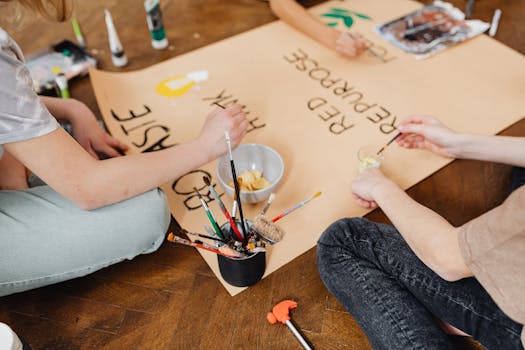
In the relentless churn of modern business, where deadlines loom and digital demands constantly vie for attention, the concept of genuine relaxation for a team can feel like a distant mirage. We often equate relaxation with passive activities – perhaps a catered lunch or a Friday afternoon happy hour. While these have their place, they rarely address the underlying tension that builds from sustained cognitive load. What if there was a more potent, more restorative approach? It turns out, hands-on creative activity is a great way to let your team relax, tapping into a different, more primal part of our brains that can effectively switch off the stress circuits. This isn’t about forced fun; it’s about curated engagement that allows for mindful immersion and a tangible sense of accomplishment, offering a powerful antidote to burnout.
The Cognitive Shift: From Pressure to Play
The typical workday, especially for knowledge workers, is heavily reliant on abstract thought, problem-solving, and constant decision-making. This engages the prefrontal cortex, which, while essential for our professional lives, can become overstimulated, leading to fatigue and anxiety. Hands-on creative activities, conversely, engage different neural pathways. When individuals are manipulating materials, building, painting, or crafting, they enter a state often described as “flow.” This state is characterized by intense focus, a loss of self-consciousness, and a distorted sense of time – hallmarks of deep engagement, but in a profoundly restorative context.
Consider the simple act of molding clay. The tactile sensation, the physical pressure, the visual feedback of the form taking shape – these elements shift the brain’s focus away from abstract worries and towards the immediate, tangible task at hand. This isn’t merely a distraction; it’s a redirection of mental energy, allowing the overtaxed cognitive faculties to rest and recalibrate. It’s fascinating how a simple, almost childlike engagement can have such profound implications for adult stress management.
Cultivating Mindfulness Through Making
Mindfulness, the practice of being present in the moment without judgment, is frequently discussed as a tool for stress reduction. While meditation apps and mindful breathing exercises are valuable, they can sometimes feel like another task to consciously perform. Hands-on creative pursuits naturally cultivate mindfulness. The very nature of working with physical materials demands attention to detail, to the process, and to the emerging outcome.
Sensory Engagement: Activities like pottery, weaving, or even intricate model building force participants to focus on sensory input – the texture of the material, the sound of tools, the visual appeal of colors and forms.
Process Over Product (Initially): While a finished piece is rewarding, the primary benefit often lies in the immersive process. This focus on the journey, rather than solely the destination, mirrors the core principles of mindful awareness.
Reduced Rumination: When you’re concentrating on not dropping a brush or ensuring a joint fits perfectly, there’s simply less mental bandwidth available for dwelling on past mistakes or future anxieties.
This sustained, yet effortless, focus allows the mind to quiet down. It’s this quietude that proves incredibly restorative, offering a true break from the mental clutter that often accompanies high-pressure work environments. This approach to stress relief is fundamentally different because it’s active, not passive.
The Tangible Rewards: More Than Just a Finished Product
The act of creating something tangible provides a unique sense of accomplishment that digital achievements often lack. In a world where work can feel ephemeral – a document saved, an email sent, a project completed but unseen by many – a physical object serves as a concrete reminder of effort and skill. This can be particularly powerful for teams who spend their days in abstract, digital realms.
Visual Reinforcement: A beautifully painted canvas or a hand-crafted item displayed in the office serves as a constant, positive reminder of shared experience and individual contribution.
Sense of Agency: Successfully completing a creative project, no matter how small, reinforces a sense of agency and competence. This feeling can bleed into other areas of work, boosting confidence and morale.
Shared Experience & Connection: When undertaken as a team, these activities foster a sense of camaraderie and shared vulnerability, breaking down professional barriers and encouraging interpersonal connection in a low-stakes environment.
It’s this tangible outcome that offers a distinct psychological benefit. It’s proof of their engagement, a physical manifestation of their downtime, and a testament to the fact that hands-on creative activity is a great way to let your team relax and recharge.
A lot of what makes beyond the brainstorm: unlocking team serenity through tactile creation interesting only shows up once you spend real time with it. This overlaps quite a bit with creative, a subject thesindi.com looks at from a few angles. It adds some useful context either way.
Choosing the Right Creative Outlet for Your Team
The effectiveness of hands-on creative activities hinges on their suitability for the team’s demographics, interests, and the desired level of engagement. Not all creative endeavors are created equal when it comes to relaxation. The goal is to find activities that are engaging but not overly complex or frustrating, and that allow for individual expression.
Consider these options:
Low Barrier to Entry: Painting (watercolors, acrylics), simple origami, adult coloring books, or even collaborative mural painting can be excellent starting points. These require minimal prior skill and offer immediate visual feedback.
Skill-Building & Deeper Immersion: Pottery classes, knitting or crochet workshops, woodworking tasters, or even culinary arts sessions can offer a more profound creative experience. These often involve a learning curve but can lead to deeper absorption and a greater sense of mastery.
Collaborative Projects: Building a large-scale sculpture, designing and decorating a communal space, or even a team “escape room” design challenge can foster teamwork while engaging creative problem-solving.
The key is to move away from activities that feel like an extension of their professional tasks. The chosen activity should invite exploration and, dare I say, a touch of playfulness. I’ve often found that offering a choice of activities can be more effective, allowing individuals to gravitate towards what genuinely appeals to them, thus maximizing the relaxation benefit.
Integrating Creativity into the Workplace Ecosystem
Implementing hands-on creative activities shouldn’t be a one-off event. To truly leverage the power of hands-on creative activity is a great way to let your team relax, it needs to be woven into the organizational culture. This can manifest in various ways:
Dedicated Creative Spaces: Designating a corner of the office for art supplies, a craft table, or even a small kiln can encourage spontaneous creative breaks.
Regular “Creative Hours”: Scheduling short, optional periods during the week where teams can engage in chosen creative pursuits.
Cross-Departmental Workshops: Facilitating workshops that bring together employees from different departments to collaborate on a creative project can foster new connections and perspectives.
* Managerial Endorsement: Leaders visibly participating in and encouraging these activities sends a powerful message about the importance of well-being and creative expression.
When integrated thoughtfully, these activities don’t detract from productivity; they enhance it by fostering a more resilient, engaged, and less stressed workforce. It’s a strategic investment in human capital, recognizing that a team that can relax and de-stress effectively is a team that can perform at its peak.
Conclusion: The Art of Recharge
The evidence is compelling: hands-on creative activity is a great way to let your team relax, offering a nuanced and profoundly effective antidote to the pressures of modern work. By engaging different neural pathways, fostering mindfulness, and providing tangible rewards, these activities go far beyond mere distraction. They are tools for genuine rejuvenation, fostering a culture where well-being is not an afterthought, but an integral part of professional success.
So, the next time you’re considering how to truly help your team unwind and reconnect, perhaps it’s time to put down the spreadsheets and pick up a paintbrush, a ball of yarn, or a lump of clay. How can you strategically introduce a tactile creative outlet into your team’s routine to cultivate a more balanced and inspired workforce?